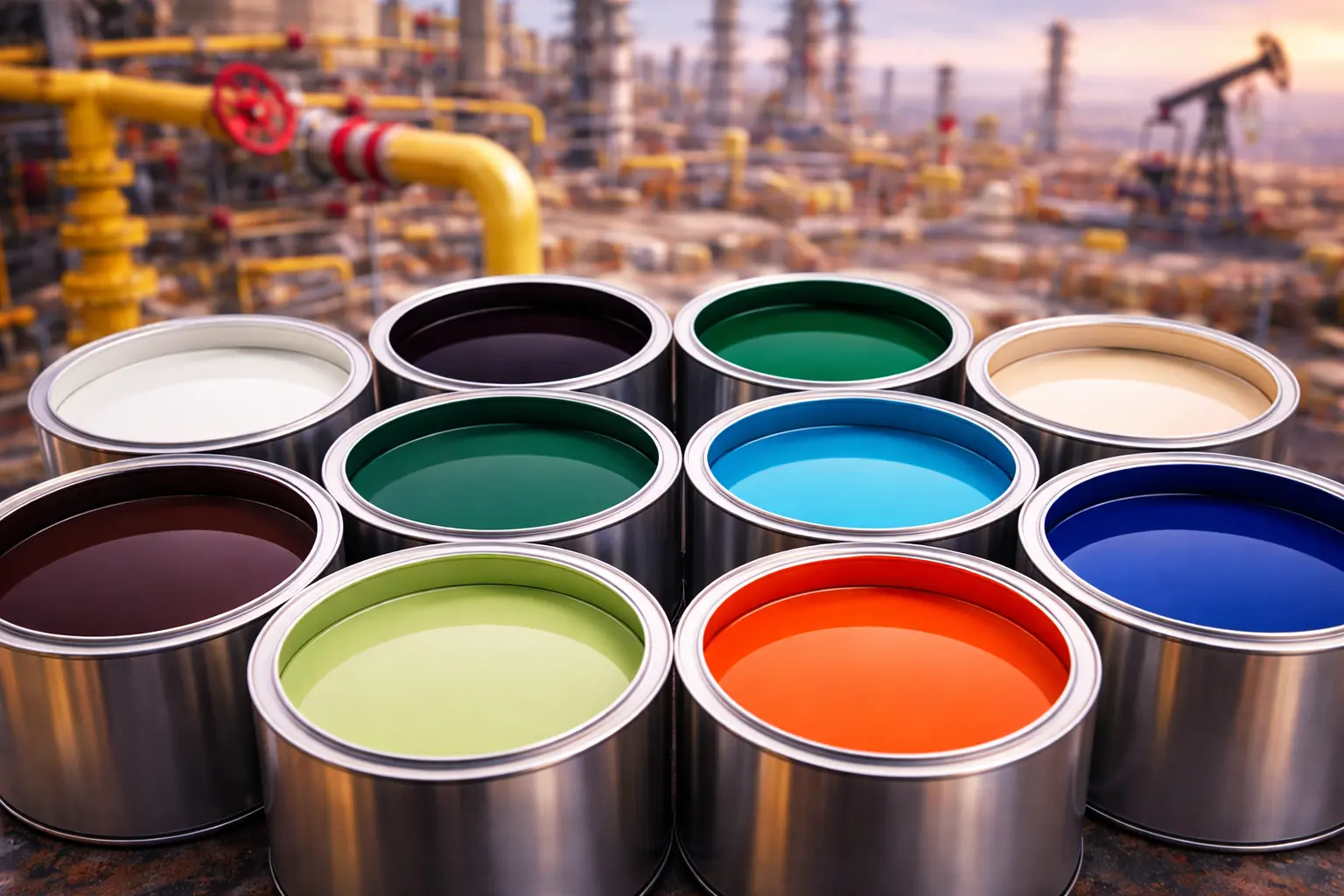
In industry,
color is not a “nice finish”: it is compliance. When color is specified, it
becomes an acceptance criterion and can accelerate a project… or stop it.
The uncomfortable
truth: a tone that is “almost the same” usually ends up costing more than the
coating itself, because it leads to rework, downtime, acceptance disputes
during handover, and loss of technical confidence.
An industrial
“color project” occurs when color is part of the technical scope and is defined
through international standards (e.g., RAL, Munsell, or Pantone) or through
corporate references with measurable parameters to ensure traceability and
consistency. This typically applies, in order of criticality, to offshore
platforms and equipment in operation, industrial tanks, naval/port environments
and vessels, piping systems (pipelines, manifolds, and pipe racks), as well as
steel structures, fire protection systems, and other asset components.
The requirement
is clear: color must be exact, consistent, and repeatable across work fronts,
phases, and maintenance activities, while maintaining its performance against
weathering and environmental aggression. When that control fails, the impact is
not simply “how it looks”: differences in tone appear, delays occur due to
availability issues, unnecessary inventories accumulate, and acceptance
disputes arise at project handover that may lead to rejection or
non-conformities.
The Color Challenge on Site: Operational and Contractual Impact
Why Color Matters Beyond Appearance
In industrial coatings, color is a functional requirement and an acceptance criterion: it supports HSE through demarcation and quick identification, and it facilitates operation and maintenance by improving asset readability in the field.
In addition, color and finish—including color and gloss retention—are performance variables. They depend on the binder’s stability against UV radiation and environmental exposure, as well as on the selection and quality of pigments and their dispersion. These factors manifest as fading, chalking, and loss of gloss over time.
For this reason, when the specification requires a standard (e.g., RAL/Munsell) with tolerances, repeatability between batches and deliveries becomes critical for defensible QA/QC. It demonstrates formulation and batch control, proper mixing, application, and curing; reduces non-conformities and rework; and supports contractual acceptance through consistent visual uniformity.
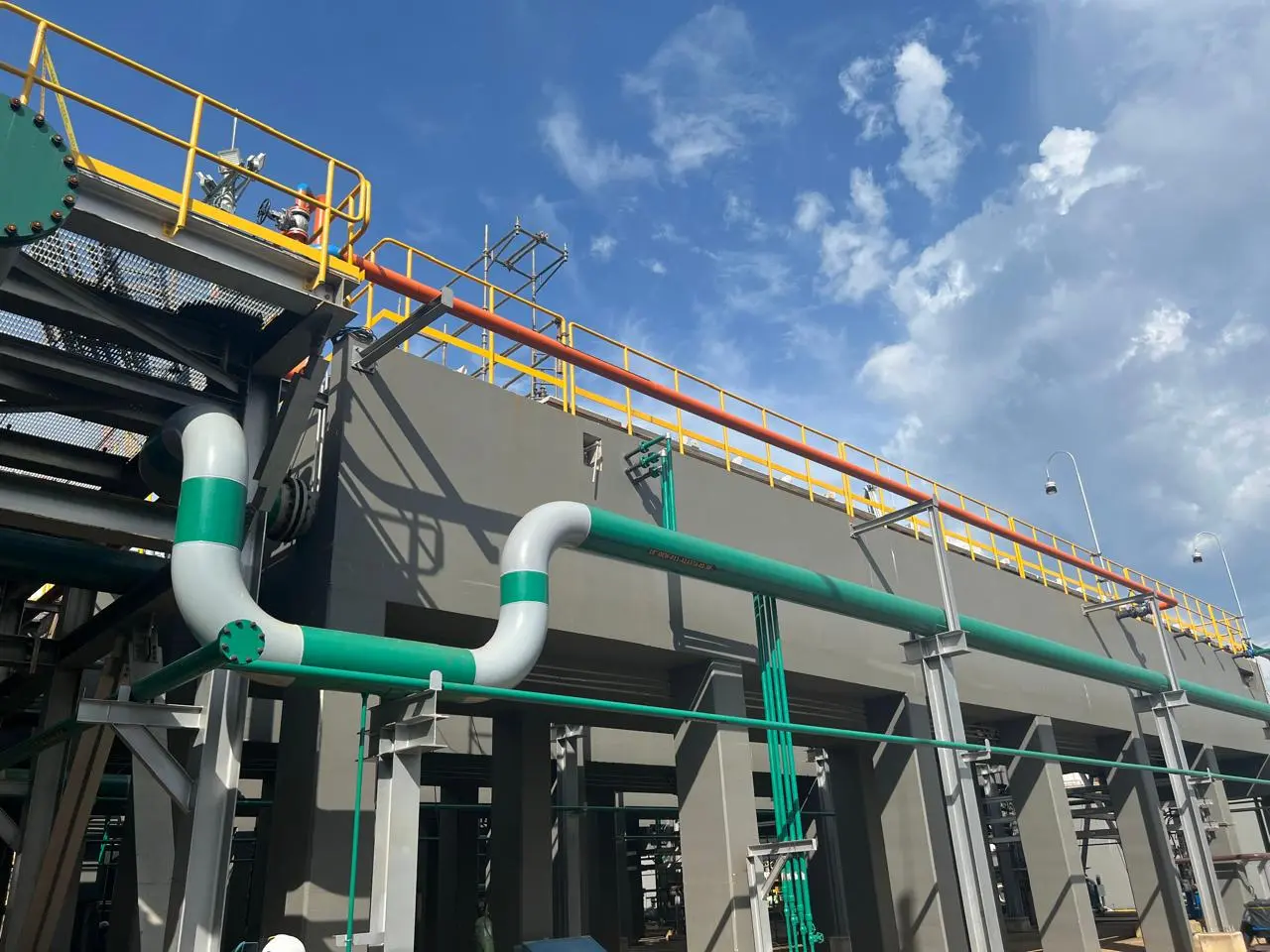
Oil project
infrastructure completed using Chromascan technology, meeting the specified RAL
color standard and delivered in full compliance | Colombia 2025.
What Changes When Color Stops Being a Problem?
When color is managed as a controlled parameter, three
things change: work fronts move forward without supply interruptions,
acceptance no longer depends on subjective discussions, and touch-ups integrate
seamlessly without delaying project closeout. The project flows more smoothly, the team reduces friction, and the client
perceives control and compliance.
This is where Chromascan
comes in—a patented technology by AkzoNobel, implemented as a color
management and formulation system (software + hardware + HSC bases and tinting
pastes with controlled dosing). It allows highly precise color production and
reproduction in minutes, based on international standards such as RAL, Pantone,
and Munsell, among other globally used reference systems.
On-site, its
contribution is concrete: it turns color into a controlled parameter, ensures
repeatability between deliveries, reduces variability between sections and
project phases, improves the integration of touch-ups, and strengthens
defensible QA/QC when color and/or finish (gloss and uniformity) are part of
the acceptance criteria.
A key advantage
in real projects is that Chromascan allows the same color standard to be
maintained even when the scope requires different coating families depending on
performance, environment, or criticality. In practice, this enables the exact
required color to be reproduced across urethane, polysiloxane, and polyaspartic
systems, among other technologies including alkyds, acrylics, and various epoxy
families.
At Aplika Control Corrosion, we provide this technology as a support service for
industrial projects, with availability across all our locations to respond
close to the work front. With Chromascan, we can reproduce any color starting
from one gallon in record time—just three minutes—and within Colombia we
guarantee same-day delivery or a maximum of 24 hours for projects
located in major cities. This ensures that color supply stops being a
bottleneck and becomes continuity of work.
We act as a technical
partner at the forefront of technology and innovation applied to industrial
coatings, enabling our clients to execute projects with greater control,
traceability, and productivity.
This approach is
particularly valuable in oil & gas, energy, mining, infrastructure,
general industry, and naval/port environments, where time and technical
certainty are critical.

